
DCD Pathway - How to access, motor skills testing, & treatment

What is Developmental Coordination Disorder (DCD)?
Developmental Coordination Disorder (DCD), is a condition affecting physical coordination. Distinguishing signs include poor motor control and hand coordination, compromised balance, and difficulty in motor learning and visual motor coordination - which is known to cause functional difficulties with activities.
Although DCD does not affect how intelligent a child is, it can make it more difficult for them to learn and they may need extra help to keep up at school.
The cause is not known, but it has been shown to run in families, and more prevalent in boys than girls. Research has shown that 5-10% of the population has motor co-ordination difficulties, and 2% of these are severely affected. This means there are 2-3 children with a co-ordination difficulty, in every classroom.
There is no cure for DCD, but a number of strategies can help children to manage their difficulties. There is nothing a child cannot do it might take them a little longer - practice makes perfect!
Examples of functional activities which may be affected:
- dressing
- writing
- using cutlery
- running
- playing sports
- riding a bike
- throwing and catching
The presenting difficulties are unique to each individual, and they can range from mild to severe in their impact on daily life.
DCD is diagnosed by a collection of symptoms. However, DCD is sometimes seen alongside other conditions, such as ADHD/ ADD, Autism, and Dyslexia. This means it can be difficult to pinpoint exactly which aspect is causing the main problem for a child in their daily activities.
Although the physical coordination of a child with DCD will remain below average, this may be less of a problem as they get older and develop coping strategies.
What is the DCD Pathway?
The DCD Pathway is for the assessment of children who have motor skills difficulties and meet the criteria for a potential diagnosis of Developmental Co-ordination Disorder (DCD).
Who can refer?
- Access to the Children's OT DCD service is by medic referral only. All referrals must be made by a Paediatrician or GP to ensure that a post assessment diagnosis can be given to the child. A neurological screening needs to be completed by the Paediatrician or GP prior to the referral being made to rule out any other underlying neurological conditions. Prior to Paediatrician or GP sending referral they will ask the school nurse to send a Movement checklist to the class teacher/ SENCo to complete and return.
My Child's Paediatrician/ GP has referred to Children's OT DCD team - what happens next?
- Once the referral is received and accepted by the Children's OT DCD team, we will automatically send you a paper copy of parent/ guardian questionnaire (printed on green paper) for children with motor coordination difficulties to be completed and returned. This gives the information we require about the impact of motor difficulties your child experiences in their day-to-day activities and provides us with signed consent to work with your child. Nothing will be actioned until this has been returned by post or email to OT service. Please note that if you have not received the questionnaire then this will indicate that we have not received a referral to service.
- Once the completed questionnaire is received from the parent / guardian - your child will be given the next available appointment to be seen by a member of the Occupational Therapy DCD team.
What tests will be carried out?
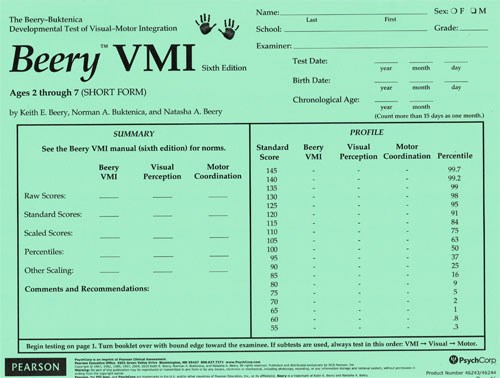
- Most children will be invited to an initial 1-hour appointment to complete the Test of Visual Perception - 4th edition (TVPS-4) and Beery Visual Motor Integration - 6th edition (Beery VMI-6) tests (screened as these skills form some of the foundations for handwriting development) – results are then interpreted and analysed by the Occupational Therapist prior to the next appointment.

- In some circumstances the Occupational therapy team may make a clinical decision for the child to proceed directly to a motor skills assessment with an OT.
- Following the completion of the initial appointment, if applicable. Parent(s) / Guardian (s) are sent an appointment letter for a motor skills assessment with an Occupational Therapist (OT) at Cherry Tree House, Clatterbridge Hospital. During the motor skills appointment the Movement Assessment Battery for Children - 3rd edition (MABC-3) standardised motor skill test is completed and results are fed back to parent/ guardian. Testing and feedback can take between 90 minutes to 2 hours.
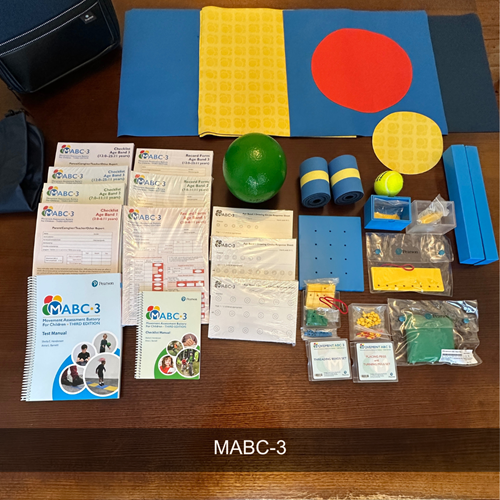
The Movement Assessment Battery for Children - 3rd edition (MABC-3) standardised motor skill test is split into 3 age bands.
Each age band test includes the following:
- 4 manual dexterity subtests to test pen control, in hand manipulation skills, bilateral hand use.
- 3 aiming and catching subtests.
- 3 balance subtests to test static (still) balance and dynamic (moving) balance.
What happens next?
- For all children tested a written report will be produced within 10 working days of the completion of the assessment with copies distributed to parent/ guardian, Paediatrician, GP, School. The report will outline the test scores, and include a plan which will have been discussed with parent/ guardian during the appointment.
- The OT DCD team do not provide diagnosis, for queries about potential diagnosis parent(s) / guardian(s) are advised to contact the referring medical practitioner.
- If a child scores in the red zone score range, this indicates a significant motor skill difficulty. Parents are given an information letter to opt-in to attend the 9-week motor skill group treatment programme, 5 weeks gross motor skills and 4 weeks fine motor skills. Sessions run 1 x per week, 45 minutes – 1 hour in duration. If parents do not opt-in within 1 month of the date of motor skills test they will be discharged from service. These groups are attended by primary age children up to and including year 7 high school children. The child's parent is given a homework programme to complete to practice and consolidate their child's skills (please see primary age information book in drop down menu at bottom of page).
- On completion of the 9-week motor skills group treatment programme the child will be discharged from the OT service. Parents are advised to continue with activity programme provided. Please note that group treatment programme can only be accessed once and a re referral will not be accepted.